Table of Contents
ToggleIf you’ve ever wondered whether it’s safe to toss aluminum foil in the dishwasher, you’re not alone, this question pops up in kitchen forums and family group chats constantly. The short answer is no: putting aluminum foil in your dishwasher is a bad idea that can damage both the foil and your machine. But the reasons why might surprise you. Understanding what happens when foil meets the harsh environment of a dishwasher helps explain why so many appliance manufacturers explicitly warn against it. Let’s break down the science, the damage risk, and what you should do instead when faced with foil-covered leftovers or baking dishes.
Key Takeaways
- Aluminum foil should never go in the dishwasher because the alkaline detergent, hot water, and mechanical action cause rapid corrosion and pitting of the metal.
- When aluminum foil breaks down in the dishwasher, loose particles deposit on dishes and coat internal components, reducing cleaning effectiveness and risking damage to spray arms and filters.
- Always remove aluminum foil from dishes and containers before placing them in the dishwasher, and hand-wash foil-covered items instead to prevent costly appliance damage.
- Dishwasher warranties explicitly exclude damage caused by aluminum foil, so any repairs from foil-related issues will come out of your pocket.
- Switch to reusable silicone lids, glass containers, or beeswax wraps for food storage to eliminate the need for aluminum foil and ensure all your kitchen items are dishwasher-safe.
- Regularly inspect your dishwasher interior for black residue or pitting that may indicate aluminum particles have accumulated on internal components.
Why Aluminum Foil Should Not Go in Your Dishwasher
The core issue boils down to chemistry and mechanics. Aluminum foil is a soft metal that reacts poorly to dishwasher conditions, especially the heat, water pressure, and alkaline detergent used in a typical wash cycle. Manufacturers design dishwashers with stainless steel interiors for good reason: they resist corrosion and wear. Aluminum doesn’t.
When you put foil in the dishwasher, you’re essentially setting up conditions for oxidation and surface damage. The metal becomes pitted, discolored, and weakened. But that’s just the start. The real danger comes from what happens next in your appliance.
The Chemical Reaction Problem
Dishwasher detergent is alkaline, meaning it has a high pH. Aluminum is reactive in alkaline environments. The combination creates a galvanic reaction, which is a fancy way of saying the metal corrodes faster when it comes into contact with the detergent solution, hot water, and other metals inside your dishwasher.
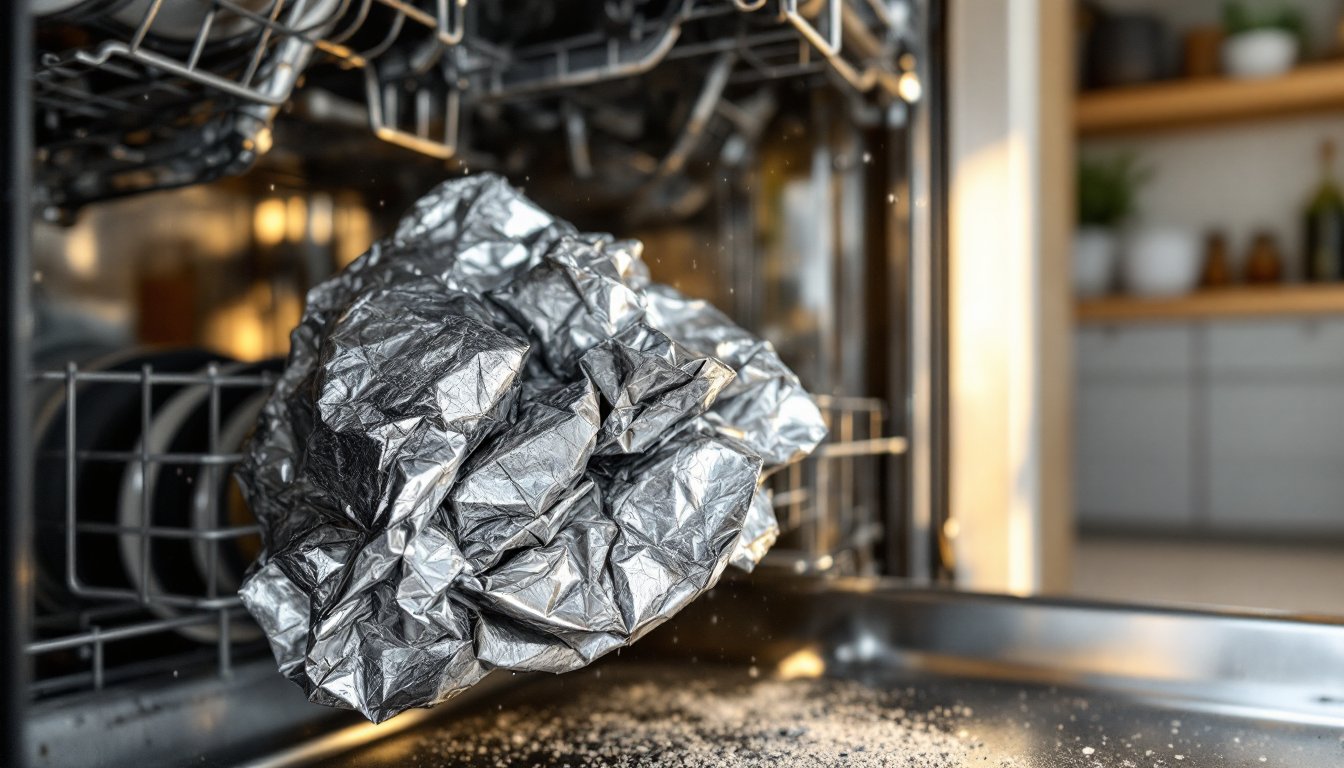
You’ll notice the foil becomes dull, pitted, and sometimes develops black or dark spots where the oxide layer breaks down. That discoloration isn’t just cosmetic. The metal is literally degrading, and small particles can flake off during the wash cycle. These aluminum particles then float through your dishwasher water and can deposit on your dishes, glassware, and the interior walls of the machine.
Damage to Your Dishwasher
Beyond what happens to the foil itself, you need to think about your appliance. Aluminum particles suspended in the rinse water can accumulate on internal components, spray arms, filters, and heating elements. Over time, this buildup reduces washing effectiveness and can eventually clog or corrode delicate parts.
Worse, if that aluminum foil comes loose and gets caught in the spray arm or drain, you’ve got a blockage on your hands. Dishwashers aren’t designed to handle loose metal debris. A clogged drain means backed-up water, poor cleaning results, and possibly a costly service call. Most appliance warranties explicitly exclude damage caused by putting foil in the dishwasher, so you won’t have coverage if something breaks.
What Happens When You Put Foil in a Dishwasher
Let’s walk through the step-by-step degradation you’ll witness if you ignore the warnings and load up some foil.
Wash cycle begins: Hot water and alkaline detergent hit the foil. The reaction starts immediately. The foil’s shiny surface begins to dull as the protective oxide coating breaks down.
Mid-cycle: As the spray arms rotate and water pressure increases, the foil becomes more pitted. If it’s crumpled or thin-gauge foil, it may start to tear or separate. Pieces fragment and float through the wash water.
Rinse cycle: Any loose aluminum particles rinse down through the filter system. Some get caught: others make it through and coat your dishes. You might notice a grayish film on glasses or silverware after the cycle completes.
After the cycle: If the foil didn’t fully disintegrate, you’ll pull out a blackened, pitted mess that looks nothing like the shiny metal you started with. More concerning, if a piece got lodged in the drain or spray arm, you’ll discover it when water backs up or the next load doesn’t clean properly.
The frustrating part? Why put foil in a dishwasher at all? According to home cleaning resources, most dishwasher-safe containers and covers exist for exactly this reason. The myth persists partly because people assume “if it’s metal, it must be dishwasher-safe”, but aluminum breaks the rule.
Safe Alternatives to Aluminum Foil for Dishwashing
When you’ve got foil-covered dishes, leftover containers, or baking trays to clean, skip the dishwasher entirely. Hand-washing takes two minutes and saves you headaches.
For covered leftovers: Remove the foil before washing. Foil is meant for storage and transport, not cleaning. Peel it off, rinse the container, and wash normally.
For baking dishes and sheet pans: Hand-wash in hot soapy water. Most baking pans (even disposable aluminum ones) will survive a quick hand-wash, and you avoid the dishwasher altogether. For stubborn, baked-on food, soak in warm soapy water for 15–20 minutes first. A soft sponge and some elbow grease beats a dishwasher cycle that might pit the metal anyway.
For storage alternatives: If you’re wrapping food for refrigeration, consider reusable silicone lids, glass containers with fitted lids, or beeswax wraps. These are all dishwasher-safe (read the manufacturer’s instructions) and reduce waste. Many homeowners find kitchen organization systems with matching containers eliminate the need for foil altogether.
For grilling or cooking: Heavy-duty aluminum foil packets are fine, just don’t put them in the dishwasher afterward. Again, hand-wash or discard if they’re too damaged.
Best Practices for Handling Foil-Covered Items
If you regularly use aluminum foil in the kitchen, here’s how to protect both your dishwasher and your dishes:
Always remove foil before dishwashing. It’s the golden rule. No exceptions. Make it a habit: unwrap, rinse, and place the foil in recycling. The foil itself is recyclable, so don’t feel like you’re wasting it.
Educate household members. If you live with roommates, family, or kids, make sure everyone knows foil doesn’t go in the dishwasher. A quick note on the door of the dishwasher or a reminder in a group chat prevents accidents.
Inspect your dishwasher regularly. If someone does slip foil past you, check the interior for black residue, pitting, or loose bits. Wipe down the interior walls and spray arms with a damp cloth occasionally to remove any aluminum particles that may have accumulated.
Load strategically. Don’t overload the dishwasher with foil-wrapped items sitting right next to it. This reduces the temptation or confusion about what’s safe. Keep foil-covered dishes or trays visibly separate until you’ve removed the foil.
Use the “hand-wash” shelf rule. Many kitchens benefit from a small basin or shelf where hand-wash-only items live. Foil-covered dishes can live there until cleaned properly. Simple living strategies often suggest designating a small space for items that don’t go in the dishwasher, pots, pans, delicate glassware, and anything with foil.
Check your dishwasher manual. Most appliance manuals explicitly list foil as a prohibited item. If you’ve lost yours, manufacturer websites host PDFs for download. It’s worth a quick look to confirm what else shouldn’t go in yours.
Conclusion
Putting aluminum foil in the dishwasher creates more problems than it solves. The metal reacts with detergent and heat, corrodes your appliance, and can leave particles on your dishes. It’s a genuinely bad idea backed by chemistry and countless user mishaps. The fix is simple: hand-wash foil-covered dishes before loading anything else, or better yet, switch to reusable storage solutions that are actually dishwasher-safe. Your appliance, and your dishes, will thank you.